

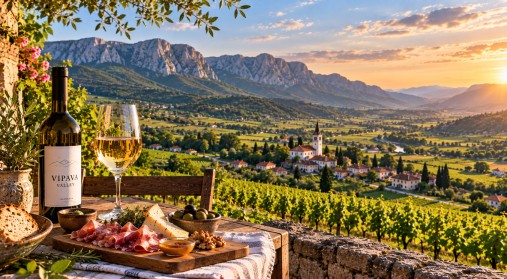
In the less-traveled corners of Slovenia, the Vipava Valley presents a serene retreat characterized by its rich agricultural roots, with vineyards, mountains, and traditional villages painting its landscape. Nestled in the southwest of Slovenia, this valley is conveniently situated about an hour’s drive from Ljubljana and near the border with Italy. The scenery here is crafted by the Vipava River, expansive agricultural fields, and the rugged karst hills cloaked in vineyards and woodland.
The valley owes much of its unique environment to the burja, a powerful wind sweeping down from the Alpine region. This seasonal wind, combined with the dry climate and distinct karst soil, has fostered a rich tradition in farming and winemaking that defines the area. Vineyards sweep across the valley’s slopes, with small wineries and estates offering visitors the chance to delve into regional wine varieties and traditional production techniques.
Gastronomy plays a significant role in attracting visitors to the Vipava Valley. The local food scene is renowned for its mature cheeses, fresh goat and sheep products, cured meats, and an array of vegetables and herbs, often featured in traditional Slovenian recipes. Dining establishments, including restaurants and farm-based venues, emphasize locally sourced ingredients, enhancing the culinary experience.
Villages in the valley are becoming integral to the tourism appeal, with old farmhouses and agricultural buildings being restored for guest accommodations. This not only preserves the historic structures but also supports the burgeoning local tourism industry. Additionally, nature lovers find plenty to enjoy, from cycling routes that weave through vineyards and villages to walking trails that ascend into the surrounding hills. The varied terrain also invites outdoor activities like paragliding.
For those interested in history, the Roman heritage of Ajdovščina and the ancient streets of Vipavski Križ offer fascinating explorations. Nearby Nova Gorica provides a glimpse into the unique cultural landscape influenced by the Slovenian-Italian border. Unlike heavily commercialized tourist hubs, the Vipava Valley is cultivating its tourism through smaller, locally-owned accommodations, farms, wineries, and activity providers. This approach preserves its rural charm while offering an alternative to Slovenia’s more popular destinations, combining food, wine, nature, and heritage in a tranquil setting.