

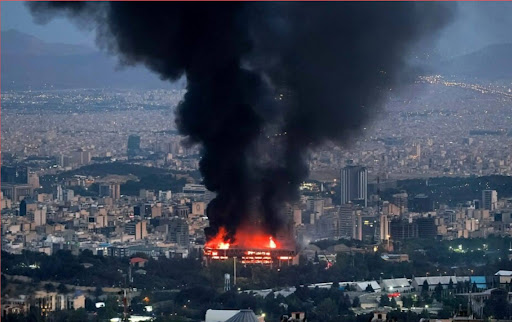
The United States Embassy in Baghdad came under missile attack overnight, adding Iraq to the growing list of countries directly caught up in the US-Iran conflict and prompting Washington to order all American citizens to leave the country immediately. The embassy said the attack was carried out by Iran-aligned militia groups and warned of continued threats from missiles, drones, and rockets operating in Iraqi airspace. The strike on the embassy compound was the most direct hit on American diplomatic infrastructure since the war began on February 28.
The incident deepened concerns that the conflict was spreading beyond its original parameters, drawing in countries and actors that had not been primary targets at the outset. Iraq’s political situation — caught between its government’s formal relations with the United States and the significant influence of Iran-aligned armed groups within its borders — had always made it a likely arena for spillover conflict. Saturday’s embassy strike confirmed those fears and added a new dimension of risk for American personnel and interests across the broader region.
US warplanes continued to bomb Iran on Saturday, striking Kharg Island for the second consecutive day. President Trump said in public remarks the island had been effectively demolished and suggested further strikes were possible. He also called on China, France, Japan, South Korea, and the UK to send warships to the Strait of Hormuz, which Iran had closed since the war began. Iran launched ballistic missiles at the UAE, striking near Fujairah’s major oil port and suspending loading operations. Iran’s military threatened to attack any Gulf energy facility with American ties.
Israel conducted dozens of airstrikes inside Iran, killing at least 15 people in Isfahan. Iran fired rockets at Israel in return. US Defence Secretary Pete Hegseth described Iran’s leadership as “desperate and hiding” underground. The International Crisis Group warned the regime remained structurally intact and capable of a sustained campaign. Trump declined to negotiate, saying terms were not yet acceptable. Energy prices were approaching $120 per barrel, with analysts warning of further increases if the conflict continued.
The human toll of the war was vast and growing. More than 1,400 Iranians had been killed in sustained bombing. Thirteen Israelis and roughly 20 Gulf residents had died. Lebanon’s crisis continued, with 800 killed and 850,000 displaced from Israeli strikes on Hezbollah. Six US troops died in a military aircraft crash in western Iraq. The embassy strike in Baghdad added a new layer of danger for American personnel throughout the region. With every new front that opened, the prospect of a swift resolution to the conflict grew more remote.