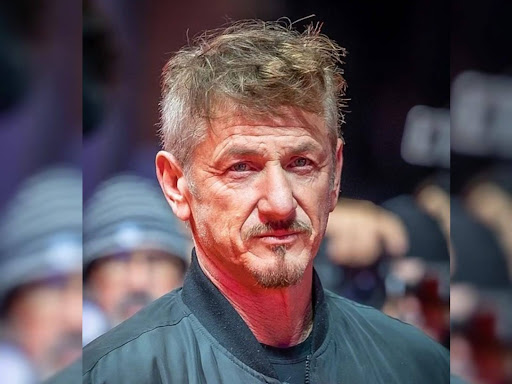
Four men have won three acting Oscars each. Walter Brennan did it first, across a remarkable run in the 1930s and 1940s. Jack Nicholson followed across a career spanning three decades. Daniel Day-Lewis achieved the feat with a level of craftsmanship that left critics speechless. And now Sean Penn has joined them, winning Best Supporting Actor at the 98th Academy Awards for One Battle After Another without being present at the Dolby Theatre. The newest member of this club is also, perhaps, its most unconventional.
Presenter Kieran Culkin accepted Penn’s award with humor, noting that Penn either couldn’t or hadn’t wanted to attend the ceremony. Penn’s prior wins — Best Actor for Mystic River in 2004 and Best Actor for Milk in 2009 — were landmark achievements in their own right. His third win, for a supporting role in a Paul Thomas Anderson film, adds a new dimension to an already distinguished career.
Penn’s role in One Battle After Another as a militaristic zealot is considered by many critics to be among his finest work. Anderson’s direction and screenplay were equally recognized — he won both Best Adapted Screenplay and Best Director, his first-ever Oscar wins after decades of producing acclaimed films. The evening celebrated both the actor’s performance and the director’s vision in equal measure.
Conan O’Brien was an entertaining and thoughtful host, weaving humor and cultural commentary into his opening monologue. He touched on artificial intelligence as a looming concern for the entertainment industry and celebrated the global composition of the nominees, drawn from 31 countries. His tone was one of guarded optimism — fitting for a ceremony acknowledging both creative achievement and real-world anxiety.
Michael B. Jordan won Best Actor for Sinners, outpacing Leonardo DiCaprio in a closely watched contest. In a ceremony defined by historic milestones, Penn’s third Oscar — and his carefully maintained absence — remains the central story.