

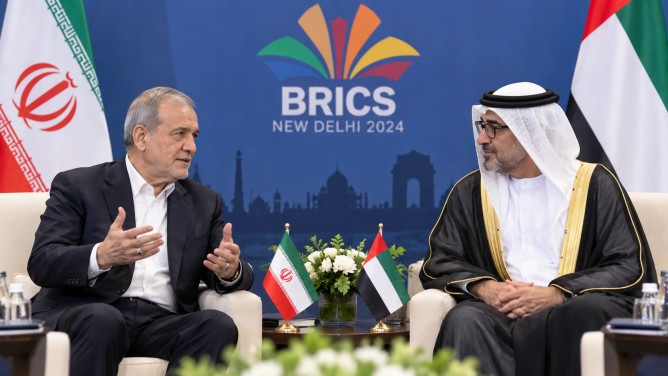
In a significant diplomatic move, Iranian President Masoud Pezeshkian has expressed a desire to mend relations with the United Arab Emirates (UAE), following a constructive dialogue with Abu Dhabi Crown Prince Khaled bin Mohamed. The meeting, which took place on the fringes of the BRICS Summit in New Delhi, was characterized by Pezeshkian as a step towards reconciliation. Both leaders emphasized the importance of moving beyond past disputes to forge a future of cooperation. This diplomatic thaw comes at a time when regional tensions remain elevated, highlighting a mutual interest in enhancing collaboration on security and shipping routes.
The broader regional context underscores the urgency of these discussions. Iran is set to engage with Gulf nations and Iraq in Oman on September 14 to deliberate on regional security and the critical Strait of Hormuz. These talks aim to foster a deeper understanding and bolster collective security efforts among neighboring countries. Notably, Bahrain has opted out of participating in these talks, highlighting varying regional perspectives on the path forward.
President Pezeshkian also underscored the need for enhanced economic collaboration among BRICS nations. He advocated for increasing the use of national currencies in trade and the development of more robust financial mechanisms. According to Pezeshkian, the reliance on the current global financial and trade systems has left emerging economies susceptible to political and economic pressures. His call to action urged BRICS members to bolster economic resilience and cooperation, particularly in the face of unilateral sanctions and attacks on civilian infrastructure.
The Iranian leader pointed to his country’s strategic advantages, including its energy resources and transit networks, as assets that could facilitate the development of trade and energy corridors linking BRICS economies. These initiatives are part of a broader strategy to strengthen economic ties and enhance mutual economic security.
These diplomatic efforts are set against a backdrop of increased tensions around the Strait of Hormuz, underlining the critical need for regional dialogue and cooperation to ensure security and stability in global energy supplies. As such, the ongoing diplomatic engagements underscore the importance of fostering a stable and cooperative regional environment.